Research Center for Infectious DiseasesLab. of Supramolecular Structural Biology
Associate ProfessorYukihiko Sugita


RESEARCH
Advancing Life Science and Drug Discovery through Structural Biology
The Laboratory of Supramolecular Structural Biology aims to elucidate the structures and functions of viruses, biomolecules, and intracellular supramolecular complexes, integrating cutting-edge cryo-electron microscopy technologies. Using single-particle cryo-electron microscopy and cryo-electron tomography, we investigate molecular machines in their native cellular environments across multiple scales, from the atomic and molecular levels to organelles and whole cells. Building on the structural insights obtained, we seek to advance molecular design and structure-based drug discovery. By actively promoting collaborations within and beyond the university, as well as partnerships with industry, we aim to contribute to advances in the life sciences and medicine through state-of-the-art structural analysis technologies.
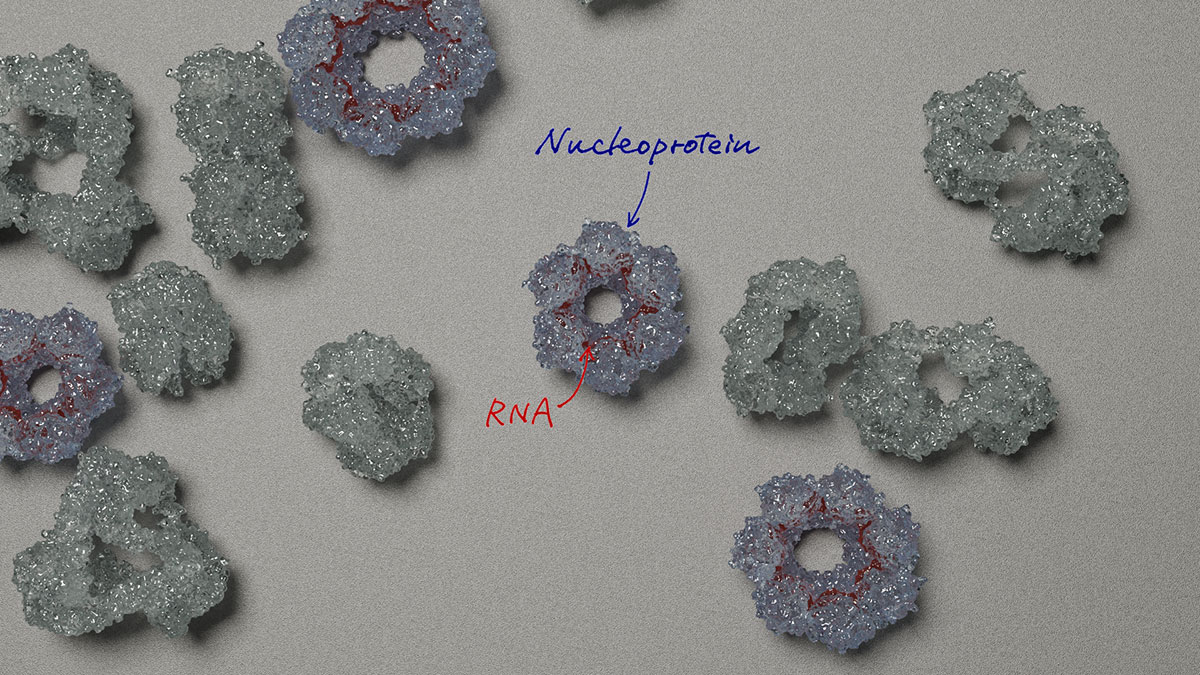
Cryo-EM structure of the Borna disease virus 1 nucleoprotein–RNA complex
Borna disease virus 1 is a negative-strand RNA virus that can cause lethal encephalitis in humans and other mammals, and belongs to the order Mononegavirales — the same group as Ebola virus and measles virus. Negative-strand RNA viruses replicate and transcribe their genome while it remains protected within a nucleoprotein–RNA complex, yet its three-dimensional structure had remained unknown for decades. Using cryo-electron microscopy, we elucidated the structure of the nucleoprotein–RNA complex of Borna disease virus 1, revealing in detail the mode of nucleoprotein assembly and RNA binding. This mode of assembly and RNA binding can be compared with nucleoprotein–RNA complex structures of other mononegaviruses, contributing to our understanding of the assembly mechanisms shared among viral replication machinery and the molecular evolution of viruses (Sugita and Hirai et al., Science Advances, 2026).
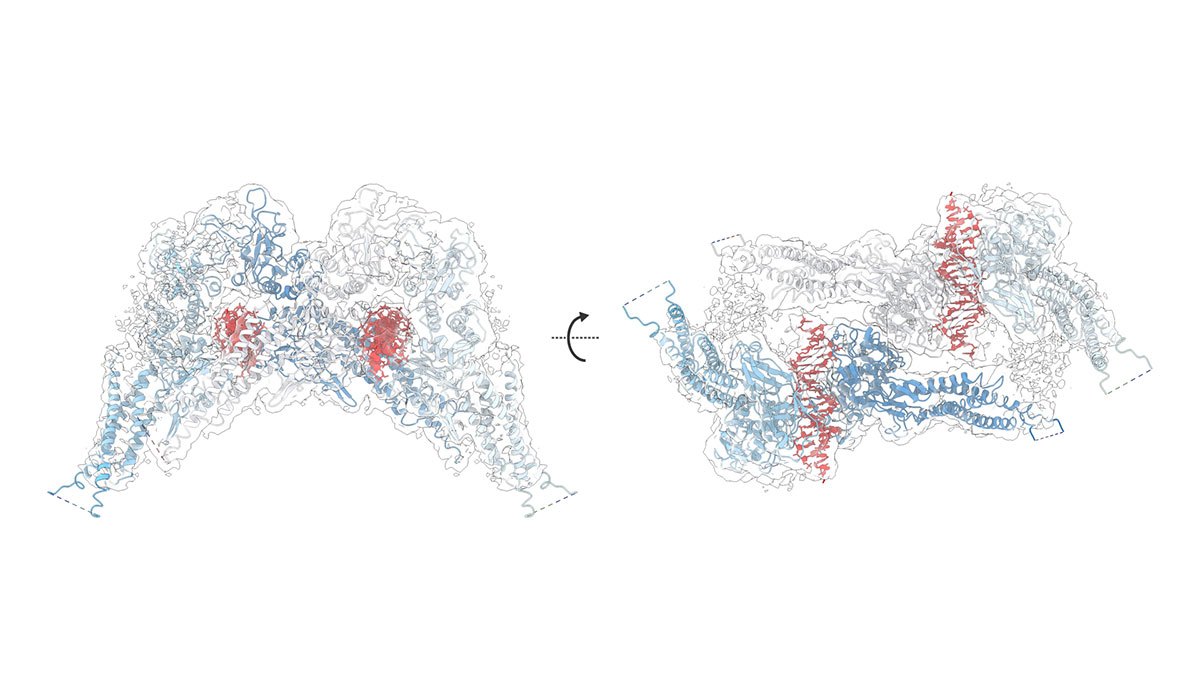
Cryo-EM structure of the DNA-bound tetrameric pY-STAT1 targeted by the rabies virus phosphoprotein
STAT1 is a key transcription factor of the innate immune response, becoming activated upon stimulation by interferons and other cytokines to drive antiviral gene expression. Beyond forming dimers, activated STAT1 was known to further tetramerize through its N-terminal domains, yet the structural basis of this assembly had remained elusive. Here, in collaboration with Dr. Toyoyuki Ose’s group at Hokkaido University, we reported the first cryo-EM structure of the DNA-bound STAT1 tetramer and revealed how the rabies virus phosphoprotein selectively recognizes this tetrameric assembly (Sugiyama and Minami et al., Science Signaling, 2025).